Use of primary barriers as a function of gantry angle in radiotherapy bunker.
DOI:
https://doi.org/10.35954/SM2023.42.2.2.e301Keywords:
Radiation Protection, Radiotherapy, Shielding against RadiationAbstract
Introduction: The design of radiotherapy bunkers is of vital importance not only for radiation safety, but also for the cost involved.
The shielding calculations of the primary walls of radiotherapy linear accelerator bunkers are determined from the use factor of these walls. International documents such as NCRP 151 use for the calculation of these barriers a usage factor equal to 0.25.
Objective: to study the distribution of the use of primary barriers according to the treatments performed, seeking to contrast the homogeneity in the use of the barriers.
Material and Methods: with the data of patients performed during one year (2021) in two linear accelerators, one dual and the other monoenergetic, a database was generated with which the frequency of use of the primary walls was calculated.
The present work evaluates the difference between the given use of the barriers and the estimates of international use.
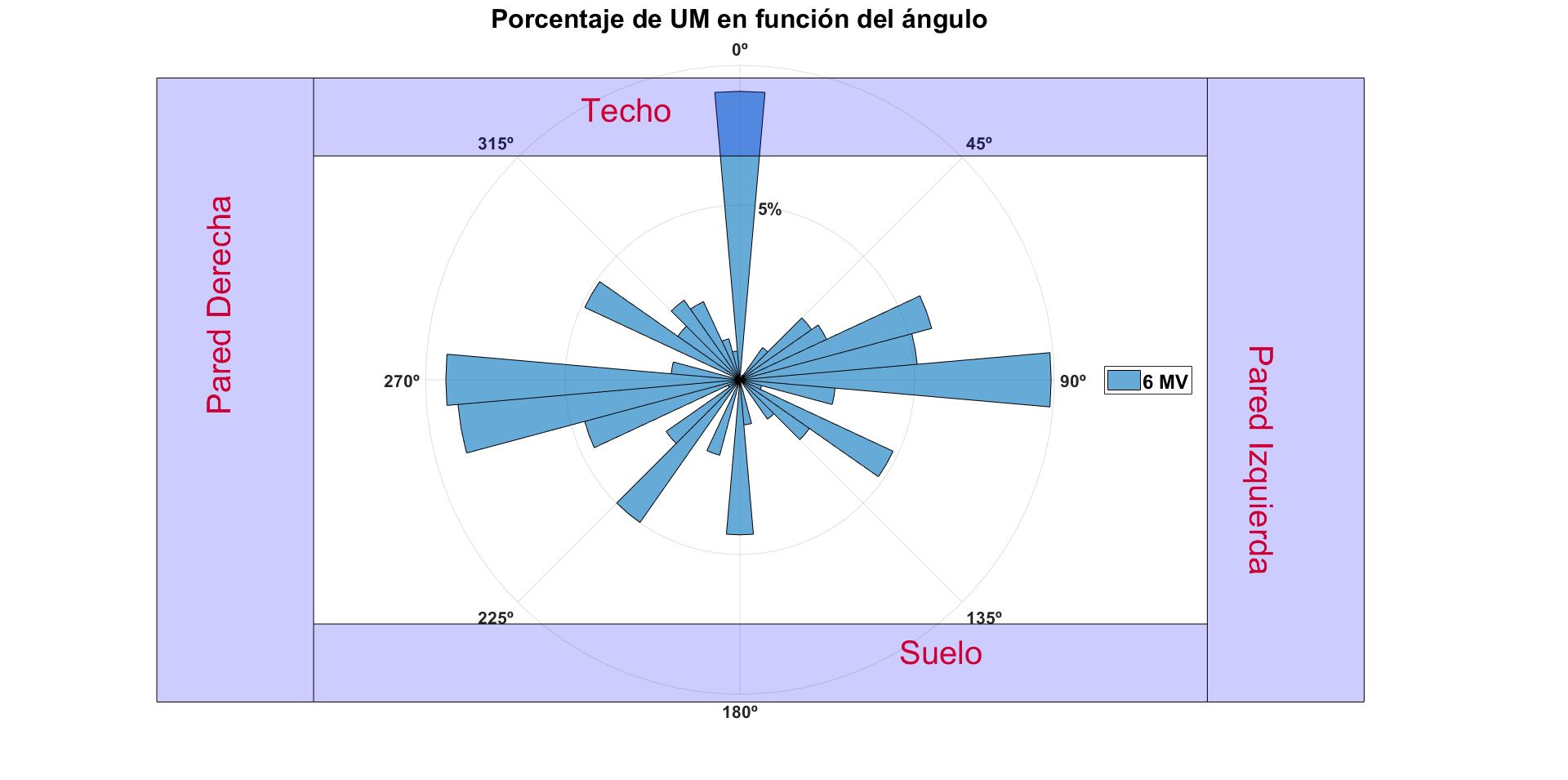
Results: it is found that in the dual accelerator at 15X energy the most used fields have gantry angles 0º, 90º, 180º, 270º, having an accumulated weight of approximately 65% as well as the workload for those angles, this implies that the angles different from these have a use much lower than the one foreseen by the initial calculation. In the dual accelerator at 6X energy the most used field is at 0º having an approximate weight of 14%, but the workload at 0º is not appreciably different from the rest of the angles since the distribution does not have preferential directions, none of the values reaches 10% which is consistent with the homogeneous use of the barrier.
In the monoenergetic accelerator, the relative weight of the 90º and 270º angles in the use of the barriers is approximately 34% for each one, higher than the 25% initially estimated.
Conclusions: the primary barriers of radiotherapy bunkers have thicknesses marked by the shielding calculation, which can be made based on international documents that are a reference on the subject. It is considered in the references for the primary barrier an equal use factor for them, however in clinical practice they can have a non-uniform use factor responding to the types of treatments that are designed to be performed in the equipment. This reality opens the door to propose optimized shielding that could generate more economical bunkers and better use of space according to the conditions given for each particular case.
Received for review: May 2023.
Accepted for publication: July 2023.
Correspondence: Mataojo 2055, C.P. 11400, Montevideo, Uruguay. Tel: (+598) 095367205.
Contact e-mail: ybanguero@cin.edu.uy
This article was approved by the Editorial Committee.
Downloads
References
(1) Martin M, McGinley PH. Shielding techniques for radiation oncology facilities: For radiation oncology facilities. 3a ed. Madison, WI: Medical Physics Publishing Corporation; 2020. DOI: https://doi.org/10.1002/mp.14749
(2) NCRP Report 151 Structural shielding design and evaluation for megavoltage x-and gamma-ray radiotherapy facilities. J Radiol Prot [Internet]. 2006; 26(3):349-349. DOI: http://dx.doi.org/10.1088/0952-4746/26/3/b01
(3) DIN 6847-2:2021-06: Medical electron accelerators - Part 2: Rules for construction of structural radiation protection. 2021. 2021-06 - Beuth.de [Internet]. Available from: https://www.beuth.de/de/norm/din6847-2/337138006 [Consulted 09/01/2023].
(4) Horton P, Eaton D. Design and Shielding of Radiotherapy Treatment Facilities IPEM Report 75. Institute of Physics and Engineering in Medicine. 2017. Available from: https://iopscience.iop.org/book/mono/978-0-7503-1440-4 [Consulted 10/01/2023].
(5) Safety Reports Series No. 47. Radiation Protection in the Design of Radiotherapy Facilities [Internet]. Available from: https://www.iaea.org/publications/7197/radiationprotection-in-the-design-of-radiotherapy-facilities [Consulted 10/01/2023].
(6) Kwon N, Shin D, Ann S, Kim J, Choi S, Kim D. Analysis of radiation safety management status of medical linear Accelerator facilities in Korea, Nuclear Engineering and Technology 2022; 54:449-455. DOI: https://doi.org/10.1016/j.net.2021.06.002
(7) Cho K, Jung J, Min C, Bae S, Moon S, Kim E, et al. Survey of Radiation Shielding Design Goals and Workload Based on Radiation Safety Report: Tomotherapy Vault. Prog Med Phys 2018; 29(1):42-46. DOI: https://doi.org/10.14316/pmp.2018.29.1.42
(8) Slotman B, Vos P. Planning of radiotherapy capacity and productivity. Radiotherapy and Oncology 2013; 106: 266-270. https://www.thegreenjournal.com/article/S0167-8140(13)00058-3/fulltext
(9) Mutic S, Low D. Whole-body dose from tomotherapy delivery. Rad Oncol Biol Phys 1998; 42 (1):229-232. DOI: 10.1016/s0360-3016(98)00199-0.
(10) Intensity Modulated Radiation Therapy Collaborative Working Group. Intensity-modulated radiotherapy: current status and issues of interest. Int J Radiation Oncology Biol Phys 2001; 51(4):880-914. DOI: 10.1016/s0360-3016(01)01749-7.
(11) Followill D, Geis P, Boyer A. Estimates of wholebody dose equivalent produced by beam intensity modulated conformal therap. Int J Radiation Oncology Biol Phys 1997; 38(3):667-672. DOI: https://doi.org/10.1016/S0360-3016(97)00012-6
(12) Mechalakos J, Germain J, Burman C. Results of a one year survey of output for linear accelerators using IMRT and non-IMRT techniques. J Appl Clin Med Phys 2004 Winter; 5(1):64-72. DOI: 10.1120/jacmp.v5i1.1960.
(13) Kairn T, Crowe SB, Trapp JV. Correcting radiation survey data to account for increased leakage during intensity modulated radiotherapy treatments. Med Phys 2013 Nov; 40(11):111708. DOI: 10.1118/1.4823776.
(14) Rodgers JE. Radiation therapy vault shielding calculational methods when IMRT and TBI procedures contribute. J Appl Clin Med Phys 2001 Summer; 2(3):157-64. DOI: 10.1120/jacmp.v2i3.2609.
(15) Stathakis S, Price R Jr, Ma CM. Dosimetry validation of treatment room shielding design. Med Phys 2005 Feb; 32(2):448-54. DOI: 10.1118/1.1853632.
(16) Reis P, Alves V, Fairbanks L. Total Workload for Radioactive Facilities with Volumetric Modulated Arc Treatment Braz J Rad Sci 2019; 7(3):1-13.DOI: https://doi.org/10.15392/bjrs.v7i3.928
(17) Saleh ZH, Jeong J, Quinn B, Mechalakos J, St Germain J, Dauer LT. Results of a 10-year survey of workload for 10 treatment vaults at a high-throughput comprehensive cancer center. J Appl Clin Med Phys 2017 May; 18(3):207-214. DOI: 10.1002/acm2.12076.
(18) Beech R, Burgess K, Stratford J. Process evaluation of treatment times in a large radiotherapy department. Radiography 2016; 22(3):206-216. DOI: http://dx.doi.org/10.1016/j.radi.2016.03.001
(19) Choi D, Ahn S, Park S, Wook D, Ahn W, Lee R, et al. Reanalysis of Linear Accelerator Use Factors for Shielding Calculations based on DICOM-RT, Research Square 2023; PREPRINT (Version 1) available at Research Square. DOI: https://doi.org/10.21203/rs.3.rs-2592495/v1
(20) Choi D, Ahn S, Kim D, Choi S, Kim J. Development of O-ring Type Radiation Treatment Equipment Shielding Evaluation and Management Program. Research Square 2023; PREPRINT (Version 1) available at Research Square. DOI: https://doi.org/10.21203/rs.3.rs-2683655/v1
(21) Rigo I, Cunha A, Emiliozzi C, Menegussi G. 11-year workload and barrier analysis for a highenergy linear accelerator. Braz J Rad Sci [Internet]. 2021 Jun. 25; 9(2). DOI: https://doi.org/10.15392/bjrs.v9i2.1687
(22) Kron T, Aldrich B, Jovanovic K, Howlett S, Hamilton C. Workload and use factor of medical linear accelerators in radiotherapy. Health Phys 1995; 69(6):971-975. DOI: 10.1097/00004032-199512000-00014.
(23) Borges M, Lima R, Pereira F, Costa P, Santos T, Antonio T, et al. CONFRONT: Proposta e implementação de um conferidor automático de cálculo em R a partir do XiO®. Revista Brasileira de Física Médica 2022; 16:595-602. DOI: https://doi.org/10.29384/rbfm.2022.v16.19849001595
Downloads
Published
How to Cite
Issue
Section
License
Copyright (c) 2023 Germán Huertas, Gustavo Píriz, Diego Guinovart, Diego Bertini y Yolma Banguero. The author retains his copyright and assigns to the journal the right of first publication of his work, which will be simultaneously subject to the Creative Commons Attribution 4.0 International License that allows sharing the work as long as the initial publication in this journal is indicated.

This work is licensed under a Creative Commons Attribution-NonCommercial 4.0 International License.
Until 2024 we use the Creative Commons Attribution/NonCommercial Attribution 4.0 International License https://creativecommons.org/licenses/by-nc/4.0/deed.es. Which states that: you are free to share, copy and redistribute the material in any medium or format, as well as to adapt, remix, transform and build upon the material. Under the following terms:
Attribution: you must give proper credit , provide a link to the license, and indicate if changes have been made . You may do so in any reasonable manner, but not in such a way as to suggest that you or your use is endorsed by the licensor.
NonCommercial: you may not use the material for commercial purposes.
As of 2025 authors retain their copyright and assign to the journal the right of first publication of their work, which shall simultaneously be subject to the license https://creativecommons.org/licenses/by-nc-sa/4.0/deed.es that permits sharing, copying and redistribution of the material in any medium or format provided that initial publication in this journal is indicated. Adapt, remix, transform and build upon the material. If you remix, transform, or build from the material, you must distribute your contribution under the same license as the original and may not make use of the material for commercial purposes.
Under the following terms:
1. Attribution: you must give proper credit, provide a link to the license, and indicate whether changes have been made. You may do so in any reasonable manner, but not in such a way as to suggest that you or your use is endorsed by the licensor.
2. NonCommercial: you may not use the material for commercial purposes.
3. ShareAlike: if you remix, transform or build upon the material, you must distribute your contribution under the same license as the original.




PlumX Metrics