Catastrophic antiphospholipid syndrome
DOI:
https://doi.org/10.35954/SM2026.45.1.7.e501Keywords:
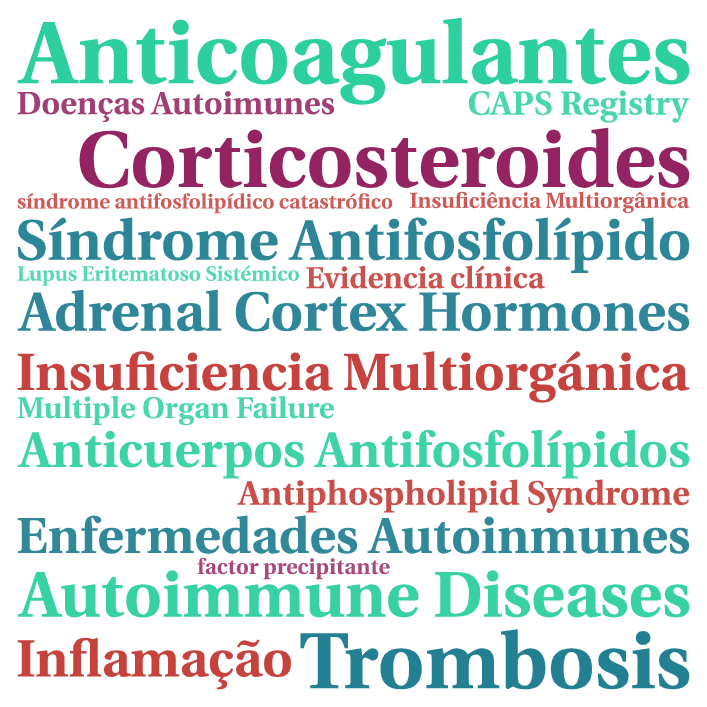
Antigoagulants, antibodies antiphospholipid, adrenal cortex hormones, autoimmune diseases, inflammation, multiple organ failure, antiphospholipid syndrome, thrombosisAbstract
Introduction: Catastrophic Antiphospholipid Syndrome is a rare variant of Antiphospholipid Syndrome, but it is highly significant due to its poor prognosis and high mortality rate, which approaches 40%. Its pathogenesis involves thrombotic and inflammatory mechanisms associated with the presence of antiphospholipid antibodies, affecting multiple organs simultaneously or within a short period of time. This leads to multiorgan failure, and therefore, treatment is aimed at attenuating the inflammatory response and preventing new thrombotic events.
Objective: To highlight the importance of recognizing the clinical manifestations of this rare disease in order to initiate early therapeutic measures and increase the survival probability of affected patients.
Methodology: The clinical case of a patient treated at the Central Hospital of the Armed Forces was analyzed. A literature review was conducted, including published articles, case reports, and clinical cases from the past 20 years, in Spanish, English, and Portuguese. No clinical cases or studies related to Catastrophic Antiphospholipid Syndrome in Uruguay were found, except during pregnancy. The following databases were consulted: Elsevier, Scielo, PubMed, MSD, and the SER textbook.
The descriptors used were: anticoagulant; antiphospholipid antibodies; corticosteroids; autoimmune diseases; inflammation; multiorgan failure; antiphospholipid syndrome; thrombosis.
Discussion: Given that Catastrophic Antiphospholipid Syndrome is a rare variant but with a poor prognosis and high mortality rate, it is crucial to promptly recognize the diagnosis and initiate intensive treatment in a timely manner. This can alter both the functional and vital prognosis of these patients.
This article was approved by the Editorial Committee.
Received for review: September 2025.
Accepted for publication: December 2025.
Publication date: January 2026.
Correspondence: Armed Forces Central Hospital. Av. Centenario 3057. Postal code 11600. Tel.: (+598) 2487 66 66. Montevideo, Uruguay.
Contact email: lorena.debernardis@gmail.com
Downloads
References
Collao CG, Díaz DC, Cáceres CA, Godoy GN, Pacheco RM, Pozo LD, et al. Síndrome antifosfolipídico catastrófico: caso clínico. Rev Chil Reumatol. 2017; 33(2):58-64 [citado 4 de agosto de 2025]. Disponible en: https://sochire.cl/wp-content/uploads/2021/09/r-809-1-1507070936.pdf
Sociedad Española de Reumatología. Tratado SER de diagnóstico y tratamiento de enfermedades autoinmunes sistémicas. 1ª ed. Madrid: Editorial Médica Panamericana, 2018. Capítulo 67. p. 472.
Barbhaiya M, Zuily S, Naden R, Hendry A, Manneville F, Amigo MC, et al. 2023 ACR/EULAR antiphospholipid syndrome classification criteria. Ann Rheum Dis. 2023 Oct; 82(10):1258-70. https://doi.org/10.1136/ard-2023-224609 Epub 2023 Aug 28. PMID: 37640450. DOI: https://doi.org/10.1136/ard-2023-224609
Asherson RA, Cervera R, de Groot PG, Erkan D, Boffa MC, Piette JC, et al. Catastrophic antiphospholipid syndrome: international consensus statement on classification criteria and treatment guidelines. Lupus 2003; 12(7):530-4. https://doi.org/10.1191/0961203303lu394oa PMID: 12892393. DOI: https://doi.org/10.1191/0961203303lu394oa
Costedoat-Chalumeau N, Arnaud L, Saadoun D, Chastre J, Leroux G, Cacoub P, et al. Le syndrome catastrophique des antiphospholipides [Catastrophic antiphospholipid syndrome]. Rev Med Interne. 2012 Apr; 33(4):19499. https://doi.org/10.1016/j.revmed.2012.01.005 Epub 2012 Feb 16. PMID: 22341856. DOI: https://doi.org/10.1016/j.revmed.2012.01.005
Bucciarelli S. Síndrome antifosfolipídico catastrófico [tesis doctoral]. Universidad de La Rioja, España, 2007. 116 p. Disponible en: https://dialnet.unirioja.es/servlet/tesis?codigo=3910 [Consulta 21/07/2025].
Cervera R. CAPS Registry. Lupus 2012; 21(7):755-7. https://doi.org/10.1177/0961203312436866 DOI: https://doi.org/10.1177/0961203312436866
Kitchens CS. Thrombotic storm: when thrombosis begets thrombosis. Am J Med. 1998 Apr; 104(4):381-5. https://doi.org/10.1016/s0002-9343(98)00061-8 PMID: 9576413. DOI: https://doi.org/10.1016/S0002-9343(98)00061-8
Rossi A. Síndrome antifosfolípido catastrófico (SAFC). Hematología 2014 Ene‑Abr; 18(1):40‑7. Disponible en: https://www.sah.org.ar/revistasah/numeros/Vol18.n1.40-47.pdf [Consulta 21/07/2025].
Downloads
Published
How to Cite
Issue
Section
License
Copyright (c) 2026 Maria Lorena Debernardis, Maria Alejandra de Vargas Moraes , María Lucrecia Martin, Ana Karen Yedrzejewski

This work is licensed under a Creative Commons Attribution-NonCommercial-ShareAlike 4.0 International License.
Until 2024 we use the Creative Commons Attribution/NonCommercial Attribution 4.0 International License https://creativecommons.org/licenses/by-nc/4.0/deed.es. Which states that: you are free to share, copy and redistribute the material in any medium or format, as well as to adapt, remix, transform and build upon the material. Under the following terms:
Attribution: you must give proper credit , provide a link to the license, and indicate if changes have been made . You may do so in any reasonable manner, but not in such a way as to suggest that you or your use is endorsed by the licensor.
NonCommercial: you may not use the material for commercial purposes.
As of 2025 authors retain their copyright and assign to the journal the right of first publication of their work, which shall simultaneously be subject to the license https://creativecommons.org/licenses/by-nc-sa/4.0/deed.es that permits sharing, copying and redistribution of the material in any medium or format provided that initial publication in this journal is indicated. Adapt, remix, transform and build upon the material. If you remix, transform, or build from the material, you must distribute your contribution under the same license as the original and may not make use of the material for commercial purposes.
Under the following terms:
1. Attribution: you must give proper credit, provide a link to the license, and indicate whether changes have been made. You may do so in any reasonable manner, but not in such a way as to suggest that you or your use is endorsed by the licensor.
2. NonCommercial: you may not use the material for commercial purposes.
3. ShareAlike: if you remix, transform or build upon the material, you must distribute your contribution under the same license as the original.




PlumX Metrics